|
profile Cecilia Lanny Winata Aliases: Lanny/Cecilia/Xenopus Location: Singapore Occupation: Grad Student, National University of Singapore Interests: Zen, Martial Arts, Japanese Culture and philosophy, Life Sciences, Religious philosophy, Christianity Hobbies: exploring new places, learning new things, walking (preferably outdoors), cooking, eating good food, home making, swimming, sea sports, anime (Naruto being the best by far), good music to accompany my different moods, and good books to read Schools/Past Affiliations: TK Bunda Hati Kudus, Jakarta (Kindergarten); SD Bintang Kejora, Jakarta (Primary 1-2, 4-6); Ironside State School, Brisbane, Australia (Primary 3-4); SLTP Santa Ursula, Jakarta (Secondary School); SMU Santa Ursula (High School); Indonesia International Taekwon-Do Federation (Jelambar, Jakarta); National University of Singapore archives November 2005 December 2005 January 2006 April 2006 May 2006 August 2006 October 2006 January 2007 August 2007 January 2008 March 2008 June 2008 September 2008 October 2008 November 2008 March 2009 April 2009 May 2009 June 2009 July 2009 September 2009 affiliates 5h4d0w's Lair My old Friendster blog credits skin by: Jane |
Sunday, June 14, 2009 @ 10:03 AM
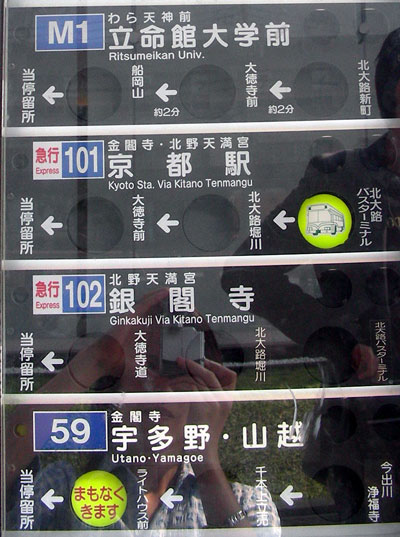
Japan - Day 2: Kyoto - The tourist-infested Higashiyama-ku We were dead tired the day before, especially for me, coz I didn't get to sleep lying down in a comfy A380 during the 6 hours flight from Singapore like somebody else. We woke up at 7am, and started to get ready for the coming day. Mike was cursing almost the whole morning, according to him, we were at least 3 hours behind his schedule. Yup, he had actually planned to get up at 4.30am to start the day before sunrise. But thanks to the extreme cold I could sleep a little longer. The morning chill made us throw the idea of taking a bath straight out of the window. We dressed up and ate the leftover onigiri from the night before, then we head out to say hello to the city that's getting ready for the long day. It was a beautiful sunny morning. We walked to Kyoto station to catch the bus to our first destination according to Mike's list: Kiyomizudera. The walk to the station looked totally different from the gloomy night before. People were rushing to work, the weather was pleasant and the air was fresh. I noticed many things I didn't, such as the nicely decorated restaurants along the way, a bus stop, and the names of the streets we walked. It was a beautiful morning. We reached Kyoto station, and waited for bus 206. They have a gadget in each bus stop which would tell you that the bus has arrived at one stop before, so you could start queuing. Unlike the digital ones they have in Singapore, this one is simply... well, not digital, like shown in someone's blog here. Basically, when a bus is coming, the figure of the bus will move one step closer to the stop you are waiting at. There was quite a crowd taking the 206 bus. I guess coz it goes to the hottest world-famous spots in Kyoto: Sanjusangendo, Kiyomizudera and Gion. There are basically two types of bus fares in Kyoto: a ride around the city central would have a flat fare of ¥220, while further out the fares depend on how far you travel. But since we bought a Kyoto City Bus All-day Pass (¥500) we were entitled to unlimited free rides for the day.  From the bus stop to Kiyomizudera, we had to go through a stretch of narrow streets which were also publicized as a touristy spot. The two parallel streets Ninenzaka/Sannenzaka is lined with shop houses selling souvenirs, restaurants, and tea houses. When we got there at around 8am, none of them were open, although some shopkeepers could be seen preparing to set up their goods.   Tea bowls at a display along Sannenzaka. Tea bowls at a display along Sannenzaka. Sannenzaka/Ninenzaka viewed from Kiyomizu temple grounds. Sannenzaka/Ninenzaka viewed from Kiyomizu temple grounds. 
 By the time we were about to wander off to our next destination, we felt hungry again. It seemed that rice flour, red beans, and preserved veggies aren't meant for proper meals. We spotted a stall selling takoyaki, so we decided to buy a packet of 8 for ¥400. We sat in a wooden bench just nearby, there were lots of other stalls selling souvenirs, from paper dolls to fake Japanese outfit. Each temple, each shrine, and other kinds of tourist spots mentioned in tourist brochures would have a line of souvenir stalls just around their vicinity. And this one seems to be the souvenir 'section' of the Yasaka shrine.
"... are we to look at cherry blossoms only in full bloom, the moon only when it is cloudless? To long for the moon while looking on the  0 Comments: |